

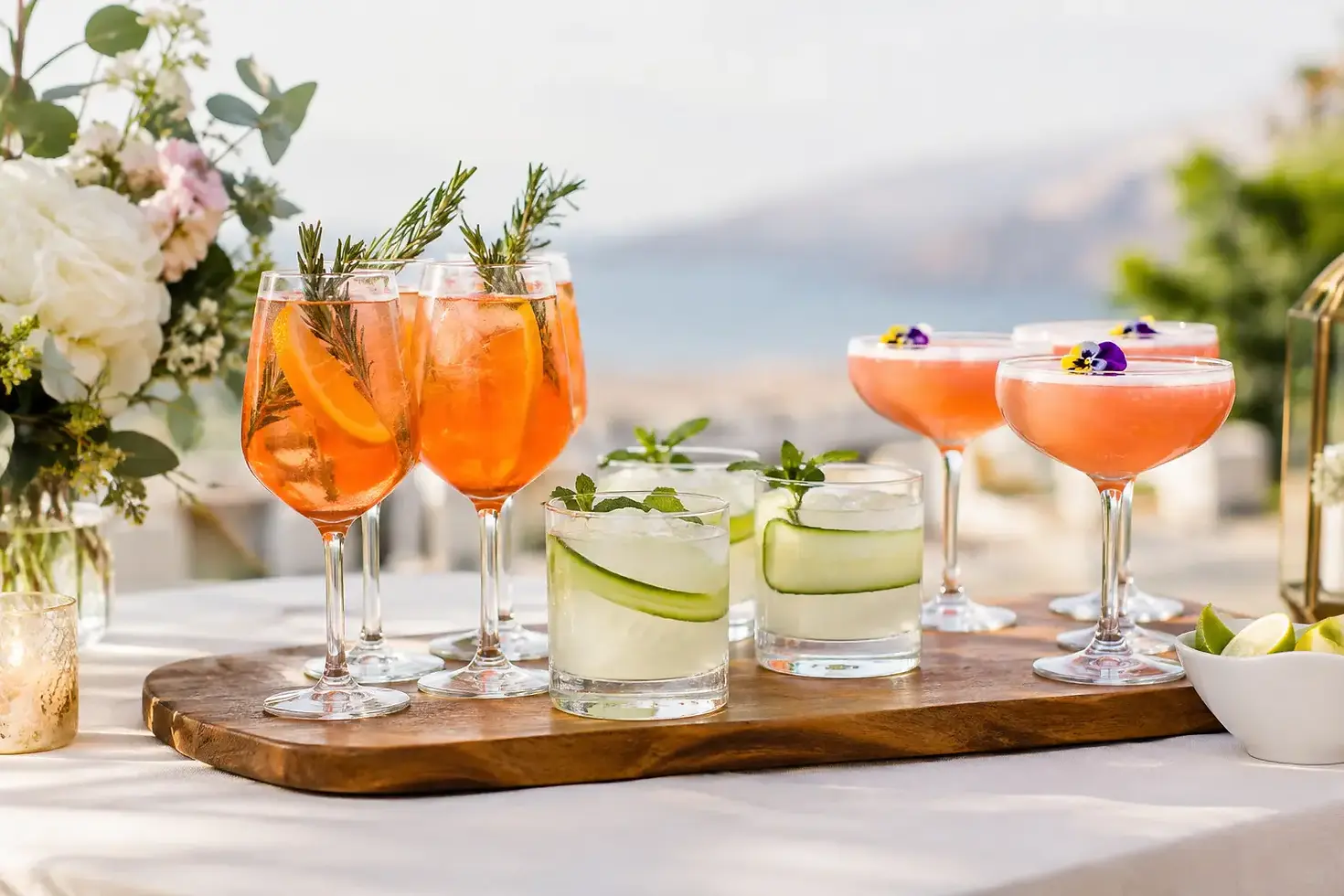
Wedding Welcome Drinks That Set the Tone

The first drink at a wedding does more than quench a thirst. It gives guests something to hold, talk about and photograph while the day begins to gather its momentum. Thoughtfully planned wedding welcome drinks turn that in-between moment - arrivals, hugs, finding seats and waiting for the ceremony - into part of the celebration rather than a pause before it.
For couples planning a London, Brighton or UK wedding, the best approach is not simply choosing a favourite cocktail. It is designing an arrival experience that suits the venue, season, guest list and pace of the day. A crisp glass of sparkling wine may be perfect for one celebration; a theatrical smoked serve, a bright alcohol-free spritz or a tray of beautifully garnished cocktails may be the better fit for another.
Why wedding welcome drinks matter
Guests often arrive at different times, especially when family photographs, traffic and last-minute outfit adjustments are involved. A polished welcome drink gives early arrivals a warm reception without making them feel as though they are waiting around. It also gives the wedding party breathing room before the ceremony or reception begins.
There is a visual benefit, too. Drinks create instant atmosphere. Coupes catching the light in a country house, colourful spritzes on a Brighton terrace or elegant highballs served from a sleek mobile bar all help establish the look and energy of the day. When the drinks are personal to the couple, they become a small but memorable piece of storytelling.
The practical advantage is just as valuable. A dedicated drinks team can manage glassware, garnish, replenishment, ice and service flow, so friends and family are not recruited into pouring prosecco. That is the difference between offering a drink and offering genuine hospitality.
Plan wedding welcome drinks around the arrival experience
Before selecting recipes, think about where guests will arrive and what they will need in that first half-hour. Is the entrance outdoors? Will everyone be travelling straight from the ceremony? Is there a sizeable gap while photographs take place? Will guests be standing, or is there a lounge, garden or terrace where they can settle in?
For a short arrival window, service needs to be fast. Pre-batched cocktails, sparkling wine pours and a considered alcohol-free option keep queues to a minimum. If guests will have 45 minutes or more before the wedding breakfast, you can introduce more theatre: a garnish station, a cocktail served with aromatic smoke, or bartenders creating a signature serve to order.
The key is to match the spectacle to the schedule. Flair bartending and molecular touches can make a wonderful impact, but they should never slow the welcome. The strongest service feels effortless because the preparation has been handled behind the scenes.
Choose a style that reflects the day
A welcome drink does not need to be complicated to feel luxurious. It needs to feel intentional. For a formal city wedding, chilled champagne or English sparkling wine with an elegant seasonal garnish can set precisely the right note. For a relaxed garden celebration, a refreshing elderflower spritz or a herb-led gin cocktail may feel more natural.
Couples with a love of bold flavours might choose two bespoke cocktails: one light and citrus-led, one richer or fruitier. Naming them after a shared holiday, a favourite song or beloved pet adds personality without becoming gimmicky. Keep the names easy for guests to understand and for staff to serve confidently.
A themed menu can work beautifully when it is subtle. Mediterranean ingredients, British summer berries, tropical flavours or a winter-spice profile can tie the drinks to the food, flowers and season. The aim is cohesion, not a costume party in a glass.
Build a menu guests can enjoy with ease
A great welcome menu has variety, but too much choice can create a bottleneck at the bar. Two alcoholic options and one genuinely appealing non-alcoholic serve are often all that is needed. If the guest list includes a wide age range or plenty of drivers, make the alcohol-free option as beautiful as the cocktails rather than an afterthought.
A sophisticated alcohol-free spritz, garden tonic or fruit and botanical cooler brings the same ceremony of garnish, glassware and presentation. It means every guest receives something celebratory, whether they are abstaining, pregnant, driving or simply not in the mood to drink alcohol.
Consider the practicalities of each recipe. Delicate coupe cocktails can look stunning, but they are less suitable for a windy coastal venue or an outdoor reception with lots of movement. Tall drinks with plenty of ice are refreshing in summer but need confident ice management. Creamy or heavily shaken cocktails may be delicious, yet they are rarely the right choice for serving 120 people in a short window.
Seasonality helps here. In spring and summer, think sparkling, citrus, cucumber, elderflower, berry and fresh herb flavours. Autumn weddings suit orchard fruits, pear, blackberry, ginger and warming spice, while winter can carry richer notes of blood orange, cranberry, rosemary or vanilla. Premium ingredients are noticed, particularly when the drink is clean, balanced and beautifully cold.
Do not forget the food pairing
If canapés are served on arrival, the welcome drink should complement rather than compete with them. Bright, dry and refreshing drinks work well with most savoury canapés. Very sweet cocktails can make delicate food seem flat, while intensely smoky drinks may overwhelm lighter bites.
This is where a combined food-and-drink service earns its place. When one hospitality team understands both menus, the timing, flavours and presentation can be planned as one experience. A sparkling aperitif alongside fresh canapés feels polished; a bespoke cocktail paired with a more dramatic food moment can feel genuinely unforgettable.
Service details that make the difference
Guests should see a drink within moments of arriving, but no one wants trays of cocktails sitting out too long. The answer is careful staging. Bartenders can prepare batched elements in advance, chill glassware where appropriate and finish each serve with fresh ice, bubbles or garnish just before it reaches the guest.
Quantity depends on your timetable. For a 30-minute arrival, one drink per guest with a sensible contingency is usually enough. For a longer reception, particularly in warm weather, plan for an additional serve and make water immediately available. Beautiful water stations with citrus, cucumber or berries are a small detail that guests appreciate all day.
Glassware deserves a conversation with your drinks supplier and venue. Real glass gives a premium feel, but access, washing facilities, outdoor terrain and breakage risk all matter. High-quality reusable alternatives can be sensible in some settings, though they may not suit a formal indoor reception. There is no universal answer - only the best choice for the space and style of your wedding.
Check the venue's bar arrangements early. Some venues require drinks to be purchased through them, apply corkage, or have specific rules around external suppliers, storage and licensing. Clarifying this before confirming a menu avoids unwelcome costs and keeps the day running smoothly.
Add theatre with purpose
Theatre is most effective when it enhances a drink rather than distracting from it. A cloche lifted to release fragrant smoke, a colour-changing cocktail, a dramatic dry-ice display positioned safely away from the drink itself, or a bartender finishing a garnish in front of guests can create a real moment of delight.
Used well, these details become part of the wedding's visual language. They give photographers something to capture and guests something to share, without making the experience feel overproduced. For an evening reception, the same theatrical style can evolve into a livelier cocktail bar, creating continuity between the daytime celebration and the party ahead.
Cocktail Chemistry can create this kind of tailored service with experienced bartenders, bespoke menu design and a mobile bar set-up that looks at home in everything from a grand London venue to a relaxed coastal celebration. The focus should always remain on the couple and their guests, not on a performance for its own sake.
Have a weather plan, especially outdoors
British weather asks for flexibility. A summer wedding may need shade, extra ice and quick access to cold storage; a cooler day may call for warmer flavours, covered service areas and a less ice-heavy menu. Wind can affect napkins, garnishes and glassware, while rain can change an outdoor drinks reception in minutes.
A professional team will plan for these variables, but couples can help by choosing a menu with a graceful Plan B. A sparkling welcome can move indoors easily. A delicate frozen cocktail station may not. Build in options that preserve the experience even if the forecast changes.
The most successful welcome drinks feel like a generous first gesture: personal, delicious and beautifully delivered. Give guests a reason to smile as soon as they arrive, and the rest of the day already has a little more sparkle.


Comments