

Wedding Catering Trends for an Unforgettable Day

A plated three-course meal still has its place, but the most exciting wedding catering trends are shifting the focus from formality to feeling. Couples are asking a better question: what will make our guests talk, taste, mingle and remember? The answer is rarely one enormous menu. It is a sequence of well-timed moments, from the first welcome drink to the late-night bite.
For weddings across London, Brighton and the wider UK, food and drink are becoming part of the entertainment. Guests want quality, certainly, but they also value choice, personality and a little theatre. Done properly, that does not mean turning the reception into a gimmick. It means designing hospitality that feels unmistakably like the couple hosting it.
Wedding catering trends that put guests first
The strongest trend is not a single dish, colour palette or viral food station. It is guest-centred catering. Rather than following a fixed format because it is traditional, couples are looking at the rhythm of their day, the venue layout, their guest list and the atmosphere they want after the ceremony.
A relaxed garden wedding may suit roaming canapés, chilled spritzes and bowl food served as the sun goes down. A city celebration could begin with polished champagne service, move into refined sharing plates and build towards an espresso martini bar after dinner. Neither approach is inherently better. The right one gives guests enough food, enough pace and enough reason to enjoy each stage of the day.
This is why food and drink should be planned together. A bold cocktail menu beside a heavy meal can feel like too much, while beautiful canapés without a considered drinks service can leave the arrival moment flat. When the bar team and caterers work in step, the entire reception feels more generous and effortless.
Interactive food, without the queue
Live finishing stations, chef-led service and made-to-order moments remain popular because they create movement and anticipation. Think tacos assembled with bright, seasonal toppings, elegant pasta finished in a Parmesan wheel, or a dessert station where guests choose their own garnish. The appeal is obvious: people enjoy watching their food come to life.
There is a practical caveat. Interactivity only works when service capacity matches guest numbers. A single station for 150 people will create a queue just when you want the dance floor to come alive. The best setups use multiple service points, roaming staff or staggered timing so the experience feels indulgent rather than slow.
The same principle applies to drinks. A flair bartender creating a spectacular serve is brilliant for a reception reveal or a focused drinks moment. During a busy post-ceremony arrival, however, speed matters just as much as spectacle. Pre-batched premium cocktails, well-trained bartenders and a smart bar layout allow the showmanship to happen without leaving guests waiting with empty glasses.
Theatre should support service
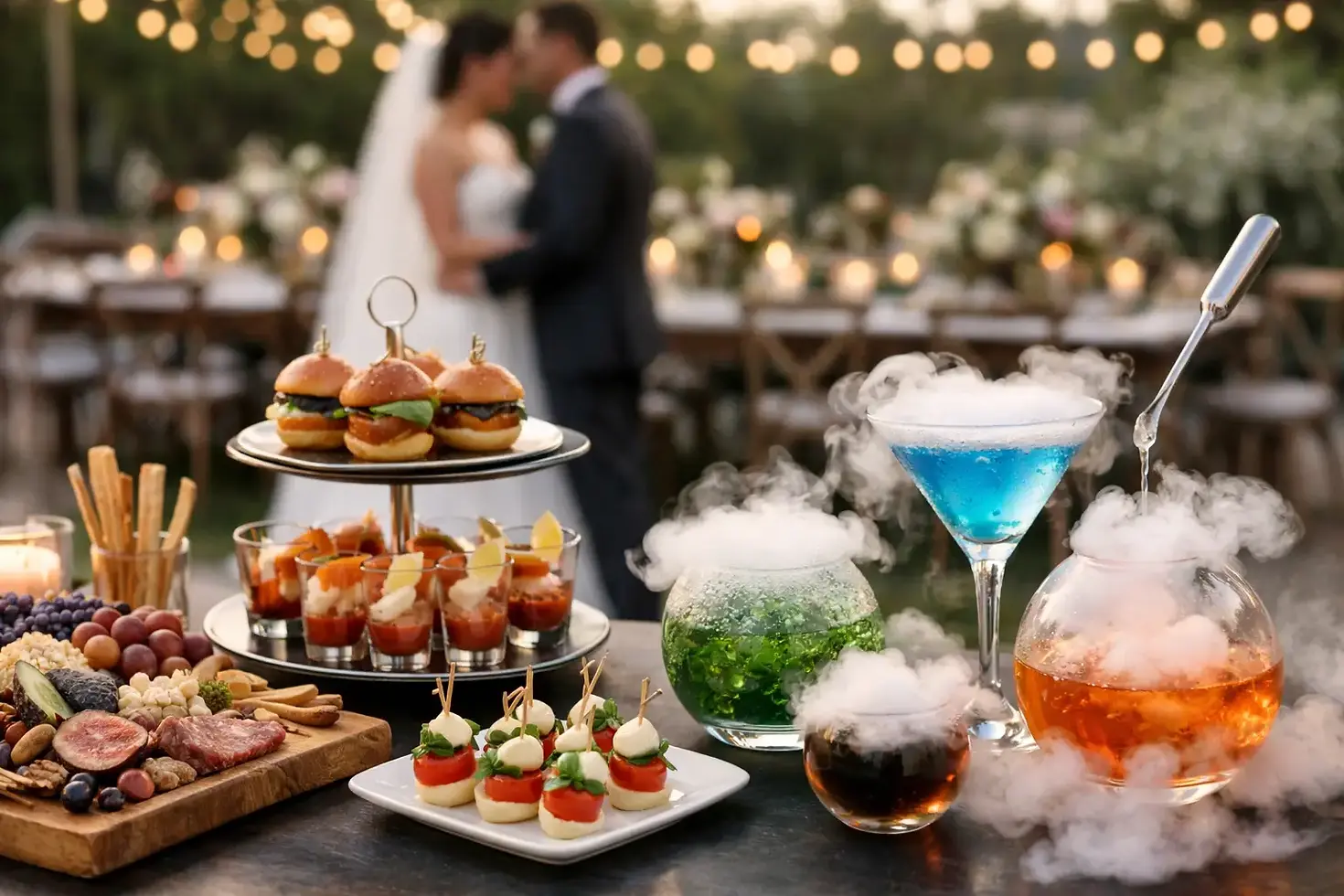
Molecular mixology, magical smoke and dramatic garnish can make an immediate visual impact, especially for couples who want their wedding to feel distinctively modern. A smoked old fashioned, colour-changing cocktail or elegant cocktail sphere can become a wonderful talking point and a memorable photograph.
But theatre earns its place only when the drink is genuinely delicious. Premium spirits, fresh juices, balanced flavours and the right glassware matter more than a flourish for its own sake. The most successful cocktail experiences pair visual drama with a menu that guests actually want to order again.
Menus with more personality and flexibility
Rigid menus are giving way to food that tells a story. Couples are weaving in favourite holiday flavours, family recipes, regional influences and dishes that reflect how they eat together. That could mean elevated British classics for a country house wedding, Mediterranean small plates for a summer celebration or a late-night nod to the couple's first date.
Sharing menus and bowl food are particularly effective when the goal is a sociable room. They invite conversation, offer variety and can feel less formal than a traditional plated meal, without sacrificing quality. They also work well for venues where a formal sit-down service is difficult to deliver.
That said, a plated meal still offers a sense of occasion and can be the easiest option for a very large guest list or a tightly timed day. The choice depends on the experience you are creating. A caterer should be able to explain the operational trade-offs clearly, rather than treating one format as the default for every celebration.
Dietary requirements are also becoming a central part of menu design, not an afterthought at the bottom of an RSVP card. Excellent vegan, vegetarian, gluten-free and alcohol-free options should look and taste as considered as every other choice. No guest should receive a visibly lesser dish simply because they have an allergy or dietary preference.
The rise of the considered drinks menu
Couples are becoming more selective about what is behind the bar. Instead of trying to offer every possible spirit, beer and mixer, many are choosing a tighter, better-curated selection. A concise cocktail menu designed around the season, the couple's tastes and the meal can feel much more premium than an unfocused bar list.
Signature drinks continue to be a favourite, especially when they have personality rather than novelty. Perhaps one drink is inspired by a favourite city break, another by a shared dessert, and a third is a sophisticated alcohol-free serve with the same attention to flavour and presentation. A good menu makes room for guests who love a classic martini as well as those who would rather have a sparkling elderflower and citrus cooler.
Low-and-no alcohol is now a hospitality expectation. These drinks should not be limited to lemonade or a sugary mocktail. Fresh herbs, quality cordials, verjus, tea infusions, non-alcoholic spirits and textured ingredients can create complex serves that look every bit as celebratory. This is a small detail with a big effect: everyone can join the toast properly.
At Cocktail Chemistry, bespoke cocktail development can bring the food, bar and visual identity of the day into one coherent experience, while experienced staff keep the practical side calm and polished.
Sustainability that guests can see and taste
Sustainable wedding catering is moving beyond vague promises. Couples are asking where ingredients come from, how surplus food is handled and whether disposable serviceware is necessary. Seasonal produce is often the most straightforward place to start. It tastes better, travels less and gives the menu a natural sense of time and place.
This does not require a menu that feels worthy or restrictive. A summer menu might celebrate British berries, peas, tomatoes and fragrant herbs; an autumn wedding can lean into orchard fruit, squash and richer, warming flavours. Local suppliers can add character, but the priority should remain quality and reliability, particularly for large-scale events.
Waste reduction is equally practical. Accurate guest numbers, thoughtful portioning, reusable glassware and a sensible plan for leftovers make a difference without compromising the occasion. Ask suppliers direct questions about their approach. Clear answers are more useful than fashionable labels.
Late-night food is now part of the party
After several hours of champagne, dancing and celebration, guests appreciate something substantial. Late-night food has become less of an optional extra and more of a well-loved turning point in the evening. Mini burgers, gourmet toasties, loaded fries, bao buns or beautifully made pizza can bring everyone back together after the first rush to the dance floor.
The best choice is not necessarily the most elaborate one. It should be easy to eat standing up, quick to serve and appropriate to the tone of the wedding. A formal black-tie event might call for truffle chips and elegant mini sandwiches; a festival-style celebration can happily embrace bolder comfort food. Timing is crucial too. Serve it before guests become tired and hungry, not after the party has already begun to thin out.
Plan the experience, not just the menu
The most memorable weddings use catering to create a sense of progression. Guests arrive to a beautiful drink, discover flavourful food while they reconnect, enjoy a meal that feels personal, then find a new burst of energy as the evening begins. That rhythm is more powerful than any single trend.
When choosing your catering and bar team, look for people who ask about your venue, timings, guest mix and vision before suggesting a package. The most stylish food or dramatic cocktail means little if staffing, refrigeration, access and service flow have not been properly organised.
Choose the moments you want your guests to feel: welcomed, surprised, looked after and ready to celebrate. Build the food and drinks around those moments, and your wedding will have a flavour all of its own.


Comments